SAIL Reception Year

At SAIL International School, our Reception Class “P1” is a gentle first step into formal learning where confidence and curiosity grow hand in hand. 

Guided by the Cambridge Primary Curriculum, we nurture each child’s development through engaging, play-based learning that builds a strong foundation for future academic success.
book a trial day

Learning Stages

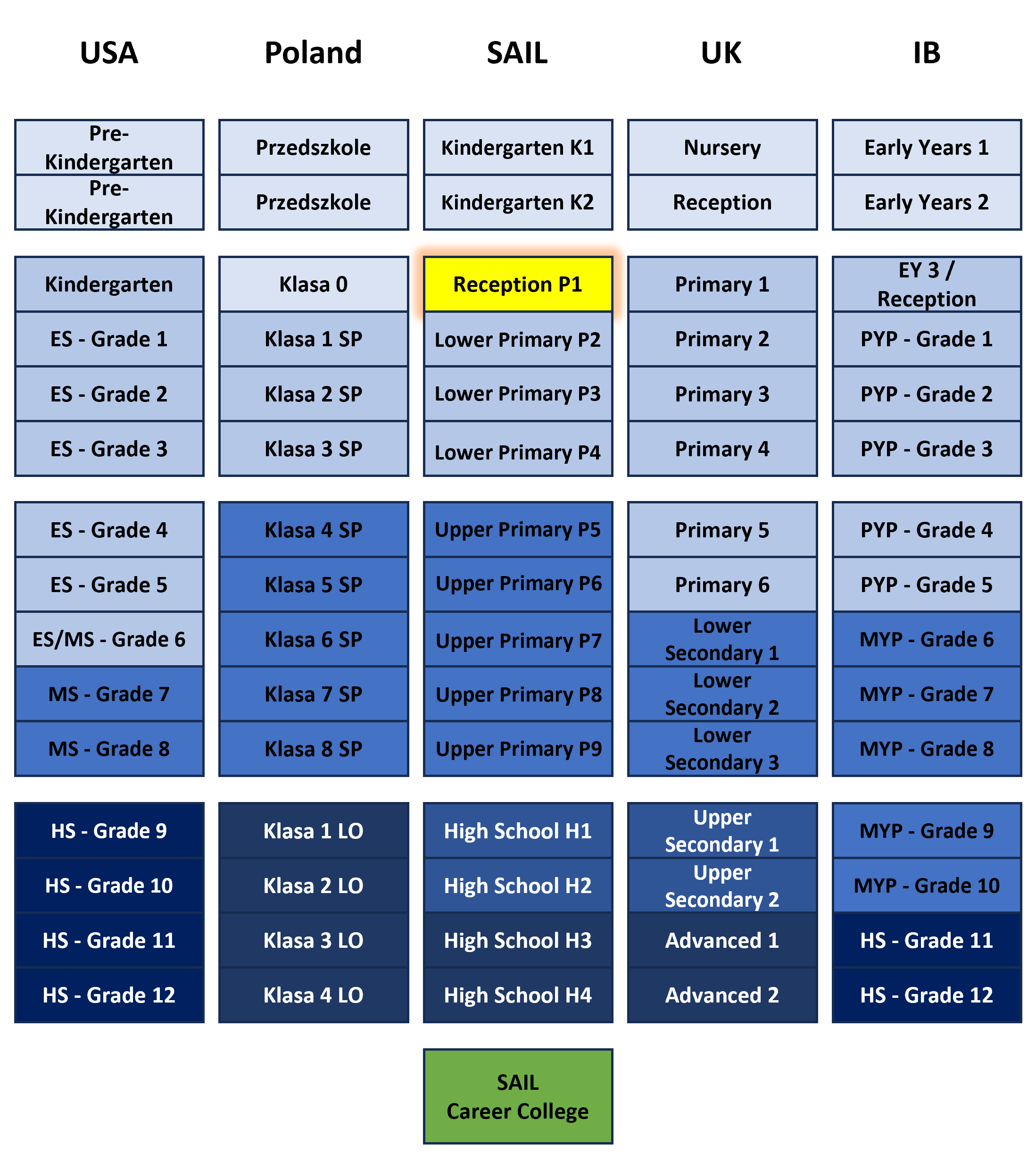
At SAIL, classmates come from many different countries - each with its own school system. Some countries, like Germany, even have several regional school systems. For your orientation, please refer to the overview of our learning stages. 

In the Reception Class, children are usually five to six years old. While this class is an obligatory preschool year in Poland, within the Cambridge curriculum it is already considered the first year of primary school, with textbooks marked for the first class. Therefore, we call it P1 (P for Primary).

Classes

Empathetic, dedicated Teaching Team

Our Kindergarten and Lower Primary is a warm and vibrant learning community where children from around the world learn, play, and grow together under the care of our dedicated teaching team from 4 continents.

International Classes

Classes are intentionally international, with students representing many cultural backgrounds. As a general policy, we aim to have no more than 50% of any one national group in a class, whenever possible. This balance helps ensure that English naturally becomes the naturally shared language of learning, play, and friendship, allowing every child to feel included and confident from the very beginning.

Small international Classes

Our Reception Year brings together children from a wide variety of cultural and linguistic backgrounds at an important stage of development. It combines a strong focus on school readiness with the hands-on approach and wider perspective of the Cambridge International Curriculum, giving children a confident and inspiring start to their learning journey.

With classes intentionally kept small, usually around 16 children and never more than 20, each child benefits from close attention, dedicated care and effective learning support.

Our warm and attentive teaching team, coming from four continents, creates a truly international environment. As a general principle, we aim for no more than 50% of children in a class to come from the same country, helping to build an open, diverse and genuinely global community from the very beginning.
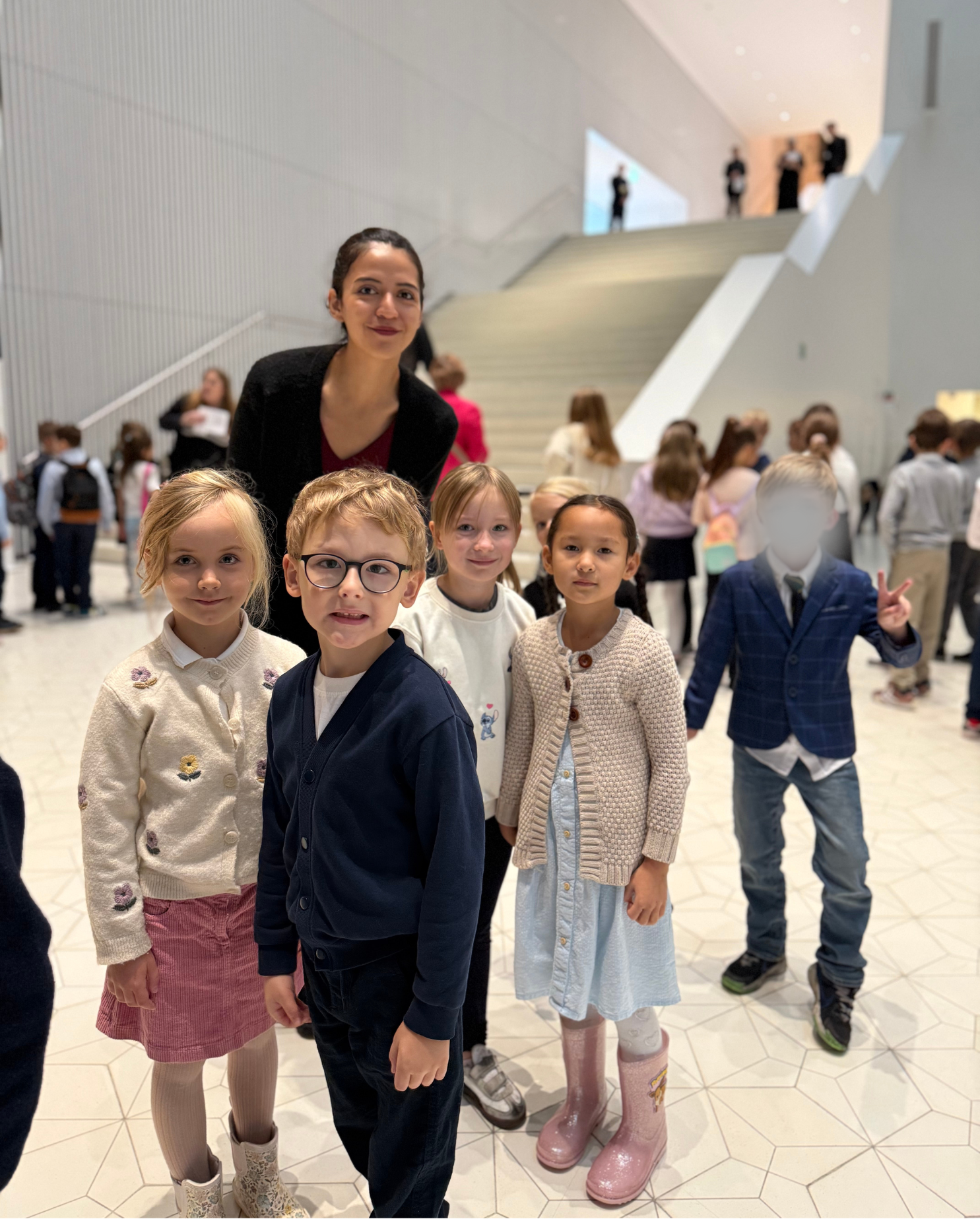
Small international Groups

Our kindergarten brings together children from a wide variety of cultural and linguistic backgrounds. To support each child’s individual development, groups are intentionally kept small, with around 16 children and never more than 20. This allows our teachers to give every child the individual attention, care and learning support they need.

Children are placed into groups with great care, taking into account both their age and their intellectual and social development. We usually offer a younger group for children aged 3-4 and an older group for children aged 4-5.

Our warm and attentive teaching team, coming from four continents, creates a truly international environment. As a general principle, we aim for no more than 50% of children in a group to come from the same country, helping to build an open, diverse and genuinely global community.

Learning Voyage

In Reception Year, children continue to learn in a warm, playful and caring environment while becoming ready for the next stage of school. At this age, the focus is on language, early reading and writing, mathematical thinking, coordination, concentration, independence and confidence in everyday routines. Through play, themed-based learning, movement, creative activities and guided tasks, children strengthen the skills they need for a smooth and happy start to school life.

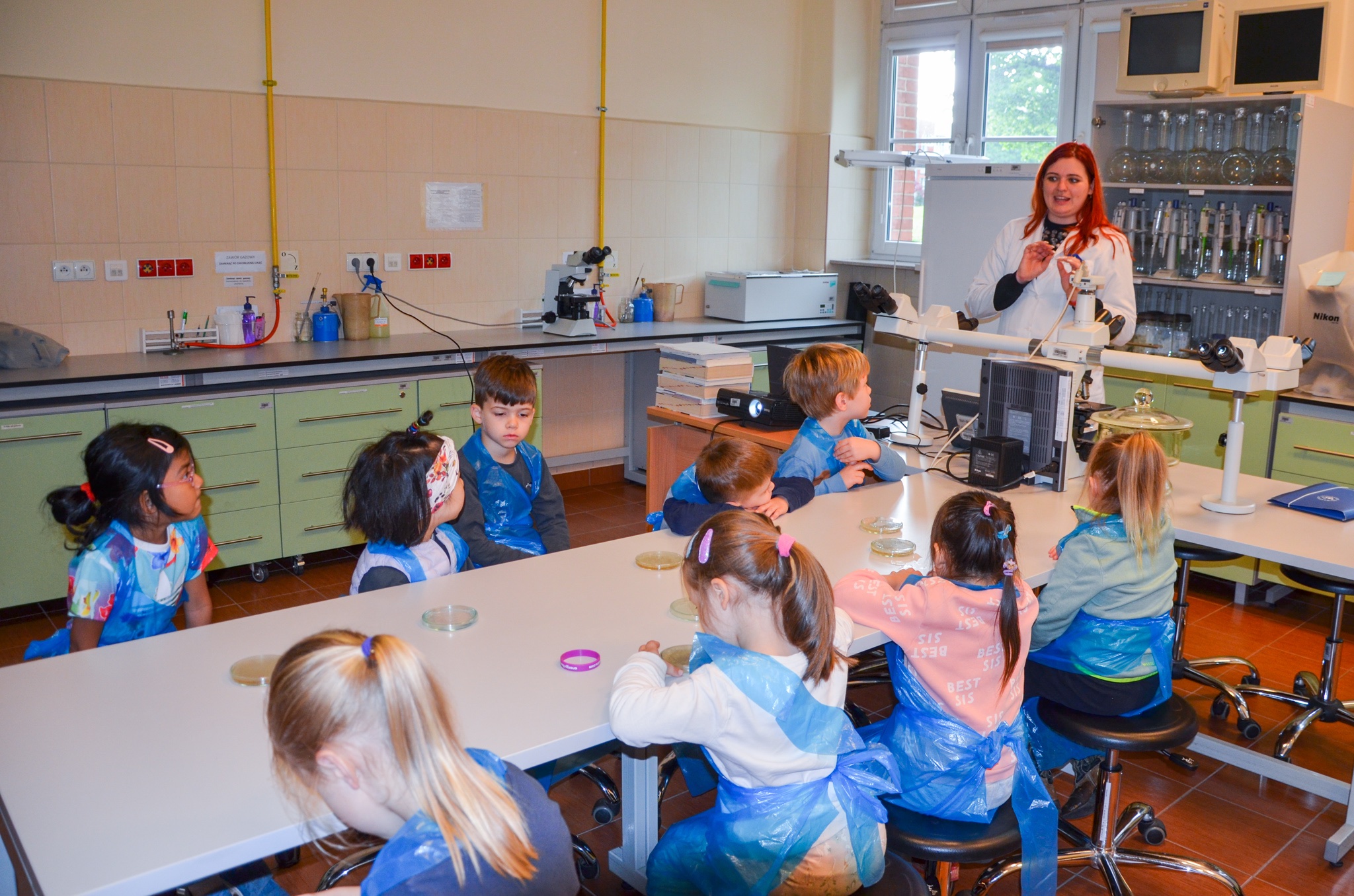
Alongside this, the Cambridge Primary approach brings additional breadth and structure. Children begin to develop early literacy in English, practical mathematical thinking and a first scientific understanding of the world through observation, questioning and hands-on exploration. This gives them an enriched start to primary learning, with strong foundations in communication, problem solving and curiosity, and helps them move into the next years of school with confidence and enthusiasm.

Daily Time Schedule

Learning takes place each day in three learning blocks, during which children explore themes from their everyday lives, such as water, food or transport, in a practical and playful way. The daily rhythm remains flexible and is adapted to the children’s age, concentration and individual needs. 

Beyond the core learning time, children may stay at our school from 7:30 am to 4:30 pm. During this time, they can enjoy supervised play, spend time with friends in day care, or take part in extracurricular activities such as dance or piano lessons. The selection of clubs and activities is set at the beginning of each school year.
Time Education / Care Program
07:30 - 08:45 Day Care Centre
Potential Playtime
08:45 - 10:05  Learning Block 1 Playful Learning
10:25 - 11:45 Learning Block 2 Playful Learning
12:25 - 13:45 Learning Block 3 Playful Learning
Extra-curricular activities According to choice 
14:05 - 17:00 Day Care Centre Potential Playtime

Impressions